Make OSHA recordkeeping part of the incident process.
Year-end reporting is easier when the information behind the forms has been captured consistently all year. Simple Safety Coach uses incident and injury information already maintained in SSC to support OSHA 300-series recordkeeping and reduce the manual work of rebuilding records later.
Keep recordkeeping connected to the information that explains what happened.
OSHA records are more useful and easier to prepare when they remain tied to the underlying incident information. SSC keeps the event, investigation details, employee injury information, lost or restricted workdays, and related recordkeeping data within the same process rather than requiring a separate year-end reconstruction.
Reduce duplicate entry when it is time to prepare OSHA records.
For organizations required to maintain OSHA injury and illness records, SSC uses the information already captured in Incident Management to produce the core OSHA 300-series forms.
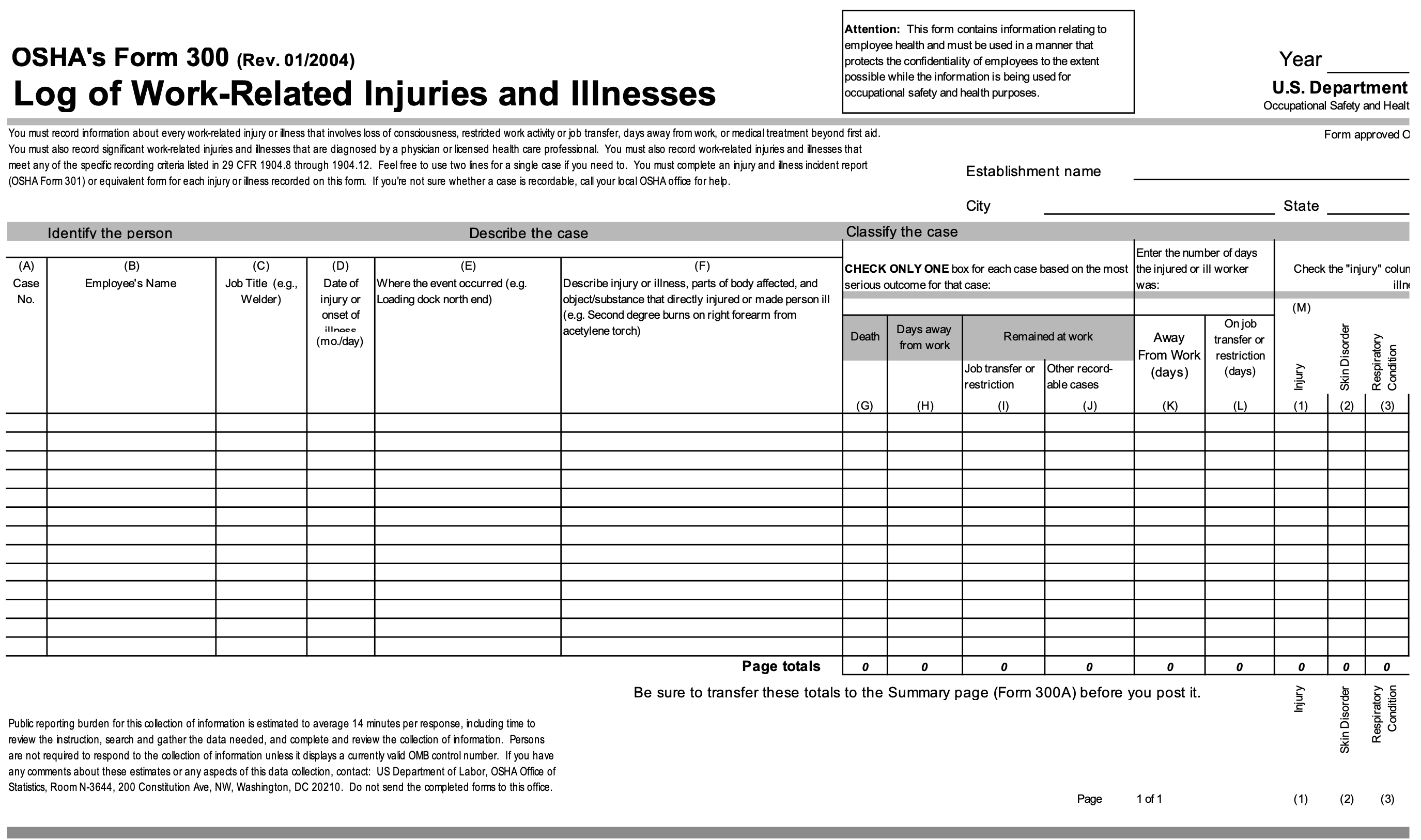
- Generate the OSHA 300 Log from recordable incident information
- Prepare the OSHA 300A annual summary from the underlying log data
- Create OSHA 301 Incident Reports from the corresponding incident record
- Keep lost-workday and restricted-workday information with the employee injury record
- Produce report output without manually rebuilding the same information in separate forms
Use the same incident data to support each part of the OSHA recordkeeping workflow.
Each OSHA form serves a different purpose. Keeping them connected to the underlying SSC incident record reduces unnecessary re-entry and makes it easier to trace a reported case back to the information behind it.
OSHA 300 Log
Maintain the annual log of recordable work-related injuries and illnesses using information captured through SSC Incident Management.
OSHA 300A Summary
Prepare the annual summary from the OSHA 300 Log data rather than compiling the year's information again from separate sources.
OSHA 301 Report
Create the incident-specific record from the information already associated with the corresponding employee injury or illness case.
Build the record throughout the year instead of recreating it later.
When incidents are reported and maintained as they occur, the information needed for recordkeeping is already organized when year-end review begins. That can reduce spreadsheet reconciliation, repeated data entry, and time spent searching for details months after an event.
Preserve context behind every OSHA entry.
A line on the OSHA 300 Log is only part of the story. Because the record originates from Incident Management, Safety Managers can return to the incident details, investigation information, attachments, and follow-up rather than treating the regulatory form as an isolated record.
Move from maintained records to the forms required for review and reporting.
SSC generates OSHA 300, 300A, and 301 report output from the corresponding incident data, helping Safety Managers move from operational records to required recordkeeping forms with less manual compilation.
Do not let recordkeeping become the end of the process.
The same incident information used for OSHA recordkeeping can also support broader incident trend analysis and prevention efforts. The objective is not simply to complete a form, but to understand what the organization can learn from the events behind it.
SSC supports the recordkeeping process; your organization still determines what requirements apply.
Not every employer is required to maintain OSHA 300-series records, and recordability, electronic submission, exemptions, industry coverage, and state-plan requirements can vary. SSC organizes the information and generates supported forms, but it does not determine whether a case is legally recordable or replace the organization's responsibility to apply current regulatory requirements.
Keep the underlying OSHA information organized when electronic reporting applies.
Certain establishments are required to electronically submit injury and illness information through OSHA's Injury Tracking Application. Those requirements depend on factors such as establishment size and industry. Maintaining complete incident and OSHA records in SSC gives Safety Managers a more organized source of information when preparing the data their establishment is required to submit.
Use recordkeeping as one step in a larger improvement process.
A practical process moves from event reporting to investigation, recordability review, required records, trend analysis, and prevention. Keeping those steps connected helps Safety Managers spend less time recreating paperwork and more time understanding what should change next.